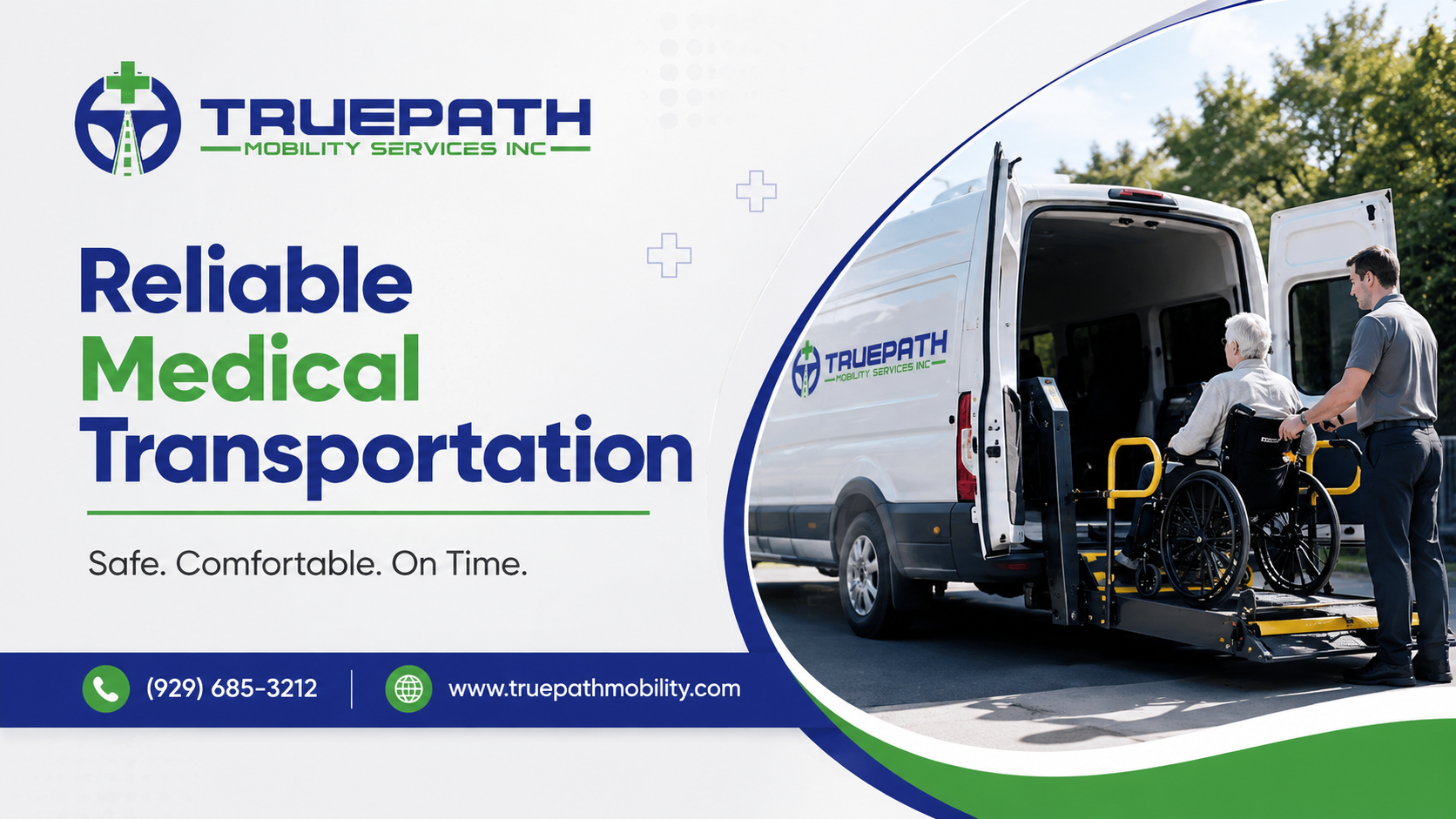
Non-emergency medical transportation (NEMT) helps people travel to medical appointments when they can't easily use public transportation, drive themselves, or arrange a ride with family or friends. These services play an important role in healthcare by helping patients reach doctors, hospitals, dialysis centers, rehabilitation facilities, and other medical providers.
What is NEMT, and why does it matter? NEMT is transportation designed for people who need assistance getting to healthcare appointments but don't require emergency medical care during the journey. Depending on the passenger's needs, a service may provide a standard vehicle, wheelchair-accessible van, or another suitable transportation option.
For many people, getting to an appointment can be just as challenging as receiving medical treatment. Older adults, people with disabilities, patients recovering from surgery, and individuals who need regular medical care may face transportation barriers. NEMT helps address these challenges and supports more reliable access to healthcare.
In this guide, you'll discover how NEMT works, who may qualify, what services are available, how much transportation can cost, and how to choose a dependable provider.
NEMT stands for Non-Emergency Medical Transportation. It's a service that helps people travel to healthcare appointments when they don't have a suitable way to get there independently.
Unlike an ambulance service, NEMT isn't designed for medical emergencies. Instead, it focuses on planned trips for patients whose medical conditions or physical limitations make ordinary transportation difficult.
For example, an older adult might need a ride to a routine checkup but no longer feel comfortable driving. A person who uses a wheelchair may need an accessible vehicle to visit a specialist. Someone receiving dialysis several times a week may require dependable transportation to and from a treatment center.
In these situations, NEMT can provide a practical solution.
Services vary by location and provider. Some companies focus on scheduled rides, while others specialize in wheelchair transportation, stretcher transportation, or assistance for people with limited mobility.
It's important to understand the difference between non-emergency transportation and emergency medical services. Choosing the correct service helps protect patients and ensures they receive appropriate care.
Feature
NEMT
Emergency Medical Transportation
Main purpose
Planned medical appointments
Urgent or life-threatening medical situations
Typical booking
Scheduled in advance
Requested immediately
Common provider
Medical transportation company
Emergency ambulance service
Medical monitoring
Depends on the service and patient's needs
Provided according to emergency care requirements
Common examples
Dialysis, routine checkups, rehabilitation
Suspected stroke, severe breathing difficulty, major injury
Vehicle type
Standard car, accessible van, or specialized vehicle
Ambulance or other appropriate emergency response vehicle
If someone experiences chest pain, severe difficulty breathing, signs of a stroke, or another potentially life-threatening emergency, call the local emergency number. NEMT isn't a substitute for emergency medical care.
Access to healthcare involves more than finding a doctor or paying for an appointment. Patients must also be able to reach the facility safely and reliably.
Transportation difficulties can lead to missed appointments, delayed treatment, and additional stress for patients and caregivers. For people who need ongoing treatment, these barriers can become especially serious.
NEMT helps bridge the gap between healthcare services and the people who need them. By providing appropriate transportation, it can support continuity of care, improve convenience, and help patients maintain greater independence.
NEMT services generally follow a straightforward process. A patient, caregiver, healthcare facility, or authorized representative arranges transportation according to the passenger's needs.
The exact procedure depends on the provider, the destination, the passenger's mobility requirements, and the payment arrangement.
Most scheduled trips follow these steps:
Booking early is often helpful, particularly for wheelchair-accessible vehicles, stretcher transportation, or recurring medical visits.
Patients should also ask whether the service includes door-to-door assistance, help entering the vehicle, or support navigating the facility. These features aren't automatically included with every ride.
The right vehicle depends on the passenger's mobility, transfer needs, and medical condition.

Standard cars and sedans
Suitable for passengers who can enter and exit the vehicle independently or with the assistance included in the service. These vehicles are often used for routine appointments and follow-up visits.

Wheelchair-accessible vans
Designed to accommodate compatible wheelchairs or mobility devices using equipment such as ramps or lifts and appropriate securement systems.

Stretcher transportation vehicles
May serve passengers who must remain on a stretcher during transport but don't require emergency ambulance care. Availability and eligibility depend on the provider and local rules.
Before booking, explain whether the passenger can walk, needs a wheelchair lift, requires assistance transferring between surfaces, or must remain lying down. Accurate information helps the provider arrange an appropriate vehicle.
A professional NEMT provider should confirm the pickup details, transport the passenger to the agreed destination, and follow applicable safety procedures.
Depending on the service, assistance may include helping the passenger reach the vehicle, securing a wheelchair, or coordinating pickup with a care facility. However, drivers don't necessarily provide nursing care, medication administration, or continuous medical monitoring.
If a passenger needs clinical supervision during the journey, the family or healthcare team should determine whether a different level of medical transportation is necessary.
NEMT can help a wide range of people who face transportation barriers. Eligibility for a particular service depends on the provider, funding arrangement, insurance plan, and passenger's circumstances.
Older adults may find driving difficult because of reduced mobility, vision changes, balance problems, or other age-related challenges. Some may no longer drive at all.
People with disabilities may also face transportation barriers when public vehicles, taxis, or ordinary cars can't accommodate their mobility devices or accessibility needs.
NEMT can provide an alternative by offering transportation suited to the passenger's situation.
Potential uses include:
For passengers who use wheelchairs, it's essential to confirm that the vehicle can accommodate the specific wheelchair and that the provider has appropriate securement equipment.
Some treatments require patients to visit healthcare facilities regularly. These include dialysis, cancer treatment, rehabilitation, and other outpatient services.
When appointments happen several times a week, transportation can become a major concern. Depending on family members for every ride may be difficult, particularly when relatives have work or childcare responsibilities.
A recurring NEMT arrangement can make planning easier. Patients may be able to schedule rides for multiple appointments, establish a regular pickup routine, and reduce the uncertainty associated with finding transportation at the last minute.
However, treatment-related transportation needs vary. Patients should confirm the pickup procedure, expected waiting time, and return-trip arrangements before beginning recurring service.
A patient recovering from surgery may temporarily be unable to drive, walk comfortably, or use public transportation. Certain medications can also make driving unsafe.
Depending on the discharge instructions and the patient's condition, non-emergency transportation may help with follow-up visits, rehabilitation appointments, and other planned healthcare journeys.
Not every patient is suitable for ordinary NEMT after surgery. Some procedures require a responsible adult to accompany the patient, while others may require clinical transport or specific discharge arrangements. Always follow the treating provider's instructions.
In rural communities, medical facilities may be far from home, and public transportation may be limited or unavailable.
People without a car, reliable family support, or convenient public transit can experience similar challenges in urban areas.
NEMT may help connect these individuals with healthcare services. However, service coverage can vary considerably, so patients should confirm whether the provider serves their pickup location and destination.
NEMT offers practical benefits to patients, families, caregivers, and healthcare organizations. While the exact results depend on the quality and availability of the service, reliable transportation can remove an important barrier to receiving care.
The first major benefit is easier access to medical appointments.
A patient might have an appointment scheduled with an excellent specialist, but the appointment has little value if the patient can't reach the clinic. NEMT helps close this gap by providing a transportation option suited to the passenger's needs.
This can be especially helpful for people who don't drive or live far from their healthcare provider.
Missed appointments can disrupt treatment plans and create scheduling difficulties for patients and healthcare facilities.
When transportation is arranged in advance, patients may have a more dependable way to attend appointments. However, outcomes depend on factors such as vehicle availability, scheduling accuracy, traffic, and communication.
Passengers should keep the provider informed about appointment changes and confirm pickup arrangements whenever necessary.
Losing the ability to drive can affect a person's confidence and sense of independence.
NEMT may help passengers attend appointments without having to arrange a ride from a relative or friend every time. This can provide greater control over their schedules and reduce reliance on informal transportation arrangements.
For older adults and people with disabilities, appropriate transportation can support continued participation in everyday life.
Caregivers often balance transportation with work, family responsibilities, and other commitments.
A dependable transportation service can reduce some of this pressure by handling planned medical journeys. It may also help families coordinate appointments when they can't personally accompany the patient.
Caregivers should still confirm whether the provider offers the required level of assistance, communicates delays, and accommodates the passenger's specific needs.
Standard vehicles aren't appropriate for every passenger.
Wheelchair-accessible vehicles and specialized transport options can help people travel when ordinary cars aren't practical. Features may include wheelchair ramps, lifts, securement systems, and additional space for mobility equipment.
Before booking, passengers should share the dimensions and type of their mobility device when requested and ask how the vehicle accommodates it.
Regular medical appointments can make daily schedules complicated.
Prearranged transportation allows patients and caregivers to plan pickup times, travel arrangements, and return journeys. Recurring bookings may be particularly useful for treatments that occur several times a week.
Although delays can still happen, clear communication and advance scheduling can make the process more manageable.
Reliable transportation may help patients follow their treatment schedules and attend preventive care appointments. This can support continuity of care and may help avoid some problems associated with delayed treatment.
Transportation services also involve costs, and NEMT isn't automatically cheaper than every alternative. Its value depends on the patient's circumstances, trip frequency, assistance requirements, and available insurance benefits.
The key advantage is that appropriate transportation can make necessary healthcare more accessible and easier to coordinate.
Not all non-emergency medical transportation services are the same. Understanding the available options helps patients choose a service that matches their mobility and assistance requirements.
Service Type
Best Suited For
Important Considerations
Ambulatory transportation
Passengers who can walk and enter a vehicle
Confirm the level of walking assistance available
Wheelchair transportation
Passengers who travel using wheelchairs
Check lift access, vehicle space, and securement
Stretcher transportation
Passengers who must remain on a stretcher
Confirm eligibility and whether medical monitoring is required
Door-to-door service
Passengers needing assistance between the entrance and vehicle
Clarify exactly what assistance is included
Recurring transportation
Patients with regular treatment schedules
Confirm repeat bookings and return-trip arrangements
Group medical transportation
Eligible passengers traveling together
Check availability, scheduling, and individual accessibility needs
Ambulatory services are intended for people who can walk and use a vehicle without specialized wheelchair equipment. Some providers may offer limited assistance getting in and out of the vehicle.
This option can work well for routine appointments, outpatient visits, and scheduled checkups.
Wheelchair transportation uses vehicles designed to accommodate passengers who travel in wheelchairs. Depending on the vehicle, access may be provided through a ramp or lift.
Passengers should ask whether they can remain seated in their wheelchair during the journey and whether their particular device can be safely secured. Not every vehicle accommodates every wheelchair.
Stretcher transportation may be appropriate for people who can't sit upright during travel but don't require emergency ambulance services.
Because needs vary, a provider must determine whether it can safely transport the passenger. If the passenger needs oxygen management, clinical monitoring, or other medical care during the trip, specialized medical transport may be necessary.
Door-to-door service typically involves transportation between agreed pickup and drop-off points. Door-through-door assistance may involve additional help inside a building, depending on the provider's policies.
These terms aren't always used consistently across companies. Ask exactly where the driver's responsibility begins and ends, particularly if the passenger lives alone or has difficulty walking.
The cost of NEMT varies according to location, distance, vehicle type, assistance requirements, and payment arrangements. There isn't one universal price that applies to every trip.
Some providers charge a base fee plus a mileage rate. Others offer fixed prices for specific routes, hourly arrangements, or recurring transportation packages.
The following figures are hypothetical and are provided only to illustrate how pricing might work. They're not actual market rates.
Charge
Example Amount
Base pickup fee
$25
20 miles at $2 per mile
$40
Total one-way trip
$65
Two separately charged one-way trips
$130
The example assumes that no waiting-time fees, taxes, tolls, or additional service charges apply.
Before booking, ask for a written estimate and confirm whether the quoted amount covers both directions. If the passenger has regular appointments, compare the total cost of individual rides with any recurring transportation arrangements available.
Insurance coverage for non-emergency medical transportation depends on the plan, the patient's eligibility, the type of trip, and applicable rules.
Some eligible patients may receive transportation benefits through government programs or private health plans. Others may need to pay out of pocket.
In the United States, Medicaid programs generally must provide necessary non-emergency medical transportation for eligible beneficiaries who have no other means of reaching covered healthcare services, subject to applicable federal requirements and state program rules.
The specific booking process, approved providers, covered destinations, and authorization requirements vary by state and arrangement.
Patients should contact their state Medicaid agency or managed care plan to confirm:
For official information, visit the Medicaid website.
Original Medicare generally doesn't cover routine, non-emergency transportation to medical appointments. Medicare Part B may cover certain medically necessary ambulance transportation when specific requirements are met, including some non-emergency situations.
Some Medicare Advantage plans may offer transportation benefits beyond Original Medicare, depending on the plan and its terms.
Patients should check their specific coverage rather than assume that every medical trip qualifies.
Some private health plans include transportation benefits, while others don't.
Coverage may depend on the patient's plan, the purpose of the trip, medical necessity, network requirements, and prior authorization.
Before arranging a ride, call the insurer and ask whether NEMT is covered, which providers are authorized, and what costs the patient may have to pay.
If coverage isn't available, patients can ask providers about self-pay rates, recurring-trip pricing, community transportation programs, nonprofit services, or local assistance programs.
Healthcare facilities may also know about transportation resources for patients who have difficulty attending appointments.
Choosing a transportation provider involves more than comparing prices. The service must be suitable for the passenger's mobility needs, destination, schedule, and expected level of assistance.
Ask whether the company complies with the licensing, vehicle inspection, insurance, and operating requirements that apply in your area.
Requirements differ by jurisdiction and service type. A provider that transports wheelchair users or offers stretcher transportation may have different obligations from a company providing ordinary passenger rides.
Ask how drivers are screened and trained. Depending on the service, relevant training may include passenger assistance, wheelchair securement, safe vehicle operation, and procedures for handling unexpected situations.
If the passenger needs medical monitoring, confirm that the provider can meet those requirements. Don't assume that every NEMT driver is a healthcare professional.
Make sure the vehicle can accommodate the passenger and any mobility equipment.
For wheelchair transportation, ask about ramps or lifts, securement systems, passenger restraints, and weight or size limits. If the passenger requires stretcher transport, confirm that the vehicle and staff are appropriate for that journey.
A provider should explain its booking process, pickup expectations, cancellation rules, and procedures for communicating delays.
Useful questions include:
Read recent customer feedback and look for patterns relating to punctuality, respectful treatment, vehicle cleanliness, and communication.
When comparing prices, ensure you're comparing similar services. A low quote may not include waiting time, extra assistance, or a return trip.
Ultimately, the best provider is one that offers appropriate transportation, clear pricing, reliable communication, and safe service for the passenger's needs.
Although NEMT can make healthcare more accessible, patients may encounter scheduling problems, limited service areas, or difficulties arranging specialized vehicles.
Planning ahead can help reduce these challenges.
Transportation companies may experience high demand during busy periods. Delays can also occur because of traffic, weather, or changes to earlier bookings.
Practical solution: Schedule rides early, allow sufficient travel time, confirm pickup arrangements, and ask about the provider's procedure for handling delays.
Some rural areas have fewer providers, and not every company offers wheelchair or stretcher transportation.
Practical solution: Contact several providers, ask healthcare facilities about local resources, and confirm service coverage before relying on a particular company.
Medical appointments can run longer than expected. A driver may not be able to wait indefinitely, especially when transporting other passengers.
Practical solution: Ask whether return trips are booked for a fixed time or coordinated after the appointment. Understand any waiting-time charges and rescheduling policies.
Patients may have difficulty communicating with a provider because of language differences, hearing loss, or other accessibility needs.
Practical solution: Tell the provider about communication preferences during booking. Confirm that important pickup details, contact information, and instructions are understood.
Extra mileage, waiting time, or special assistance can increase the final bill.
Practical solution: Request a complete estimate before the journey and ask about additional charges, cancellation fees, and insurance responsibilities.
With a little preparation, patients and caregivers can often make the transportation process smoother and more predictable.
NEMT stands for Non-Emergency Medical Transportation. It's a service that helps patients travel to scheduled medical appointments when they can't easily use ordinary transportation. Depending on the provider, services may include ambulatory rides, wheelchair-accessible vehicles, and specialized stretcher transportation.
Eligibility depends on the transportation provider, insurance plan, and applicable program rules. People who may benefit include older adults, individuals with disabilities, patients receiving recurring treatments, and people who lack suitable transportation. Medicaid beneficiaries in the United States may qualify for covered transportation benefits under applicable program requirements.
No. NEMT is designed for planned medical journeys that don't require emergency medical response. Ambulances provide emergency transportation and may provide medical care during transit. Patients experiencing a potentially life-threatening emergency should contact local emergency services rather than book an NEMT ride.
Original Medicare generally doesn't cover routine rides to medical appointments. However, Medicare Part B may cover certain medically necessary ambulance transportation when specific requirements are met. Some Medicare Advantage plans offer additional transportation benefits, so patients should review their individual plan.
Start by identifying the pickup location, destination, appointment time, and passenger's mobility needs. Contact a suitable provider, confirm availability and pricing, and ask whether insurance authorization is required. Book early when possible, especially if wheelchair-accessible or stretcher transportation is necessary.
Yes. Many NEMT providers offer wheelchair-accessible vans equipped with ramps or lifts and wheelchair securement systems. However, vehicle capacity and equipment vary. Confirm that the provider can accommodate the passenger's wheelchair and specific accessibility requirements before scheduling the ride.
There isn't a universal price. Costs depend on distance, location, vehicle type, assistance requirements, waiting time, and provider pricing. Some insurance or government programs may cover eligible trips. Request a detailed quote and confirm whether the return journey and additional fees are included.
Many providers offer recurring transportation for dialysis, rehabilitation, and other scheduled treatments. You should confirm that the company serves the required route, can accommodate the treatment schedule, and offers suitable return-trip arrangements. If the treatment center has transportation coordination services, ask about those options as well.
Some providers allow an accompanying caregiver or family member, while others have restrictions based on vehicle capacity, safety requirements, or service policies. Ask about companion availability when booking, especially if the passenger needs additional support during the journey.
Medical transportation services exist in many countries, but the terminology, funding, eligibility rules, and service models vary. In some places, transportation may be arranged privately, through public healthcare systems, or through community organizations. Check local providers and healthcare authorities to understand the options available in your area.
Non-emergency medical transportation plays an important role in helping people access healthcare when ordinary transportation isn't suitable. By connecting patients with scheduled medical appointments, NEMT can support greater independence, improve convenience, and reduce some of the transportation challenges faced by patients and caregivers.
Understanding the available vehicle types, eligibility rules, insurance benefits, pricing structures, and provider standards makes it easier to choose an appropriate service. Whether someone needs a routine ride to a doctor's office, wheelchair-accessible transportation, or recurring trips for treatment, planning ahead can make the journey more manageable.